

Borrowed Credibility
Neil deGrasse Tyson, John Mack, and Who Gets to Speak as Disclosure Unfolds

Michiel Schuurman, Information Overload, 2014.
Neil deGrasse Tyson is releasing a book about UFOs.
The title is Take Me to Your Leader: Perspectives on Your First Alien Encounter. The description tells us that ever since childhood, he has wanted to be abducted by aliens.
Take a moment with that.
This is the same man who told CNN, with full confidence, that
“the evidence is so paltry for aliens to visit Earth, I have no further interest”
and invited anyone who disagreed to
“call me when you have a dinner invite from an alien”.
The same man who, as recently as this May 7th this year, dismissed the entire category of witness testimony by declaring that
“the era of trust-me testimony has reached its expiration date”.
Not this witness or that witness. The era. All of it. Every person who came forward with an account of something they could not explain, every experiencer who risked their career and their relationships and their credibility to tell the truth about what happened to them: the era of their testimony, he said, was over.
And now there is a book.
Here is what needs to be said about the credibility he brought to that performance: it was borrowed. He is an astrophysicist. He had not studied this phenomenon. He had not investigated it, had not sat with witnesses, had not followed the data wherever it led. He imported the authority he had earned in one field and spent it in another, and he spent it on ridicule, and it landed because the audience trusted the title more than they interrogated what he was actually doing with it.
But the borrowing runs deeper than that. Tyson also inherited something more specific: Carl Sagan’s platform, Sagan’s audience, and the particular vision of science Sagan spent his life building. Consider what that vision actually was. Sagan wrote Contact. He imagined, in loving detail, a scientist who picks up a signal from the universe and follows it without flinching. Who sits before a congressional committee with no physical evidence and refuses to take the exit the room is offering her, because to disown the experience would be to disown herself. Who, at the end, makes a wish not for proof but for something harder to measure: that everyone could feel, even for a moment, the awe and humility she was given. Sagan built Ellie Arroway as his model of what a scientist should be when she encounters the genuinely unknown. Not certainty. Listening. Not performance. Witness.
That is the inheritance. That specific vision of what it looks like to approach the unknown with intellectual honesty rather than social positioning.
Tyson took that inheritance and declared the era of testimony expired. A platform built for listening, used to tell people their signal did not count. The ones who paid for that choice were not the ones holding the microphone.
And now we learn the curiosity was always there. It was there since childhood. Which means the ridicule was never really about the science. It was about the audience. He knew which way the consensus ran, and he ran with it, and he performed the skepticism the room expected, and the people who were carrying real experiences at real cost were the ones who paid for that performance.
And now there is a book. A fun book. An entertaining book. A book with etiquette tips for your first close encounter.
For the people who have actually had close encounters, this is not a thought experiment. It is not a fun hypothetical. It is something that happened to them in their homes and their fields and their sleep, something that shattered their understanding of reality and left them with no framework, no support, and a culture actively hostile to their testimony. Etiquette tips.
I want to be clear about something before I go further. This essay is not really about Neil deGrasse Tyson (though I will not pretend I am not angry about the ease with which he treated real people’s real experiences as material for performance). He is the opening example of a pattern that is about to play out at scale, and I think you need to be prepared for it.
Michiel Schuurman, Wax Hollandais, 2014.
What the Mockery Actually Cost
Before we talk about what is coming, we have to be honest about what the ridicule did. It was not abstract. It was not just bad epistemology or intellectual laziness, though it was both of those things. It landed on real people and left real damage, and we have not finished accounting for that damage.
Experiencers are an underserved and unsupported population. They are people who have had encounters with something outside the bounds of our current understanding of reality, something their own government has now acknowledged is real, and they have been carrying that experience largely alone, largely in silence, for decades. Not because they chose silence. Because the culture made speaking so costly that silence became the only rational option.
They lost jobs. They lost families. They lost their standing in communities they had spent decades building. Not because of what happened to them. Because they told the truth about it in a culture that had decided, in advance, that the truth was impossible. The stigma did not work through prohibition. Nobody was legally stopped from speaking. It worked through cost. It shaped what people felt they were allowed to say out loud. It shaped what clinicians felt equipped to ask about, which meant an entire population was seeking help for experiences their providers were not equipped and in many cases not willing to hold. It left people without language, without community, and without any cultural permission to integrate something that had fundamentally changed them.
I know what that isolation costs. I know it personally. I am a nurse and a writer and an experiencer, and I know what it is to calculate the professional risk of saying that out loud, to weigh the truth of your own experience against the very real possibility that the people who hold your career in their hands will decide you are unstable. That calculation does not happen in a vacuum. It happens inside a culture. And that culture was built, brick by brick, by people with large platforms who made it clear that witnesses were not to be taken seriously.
Figures like Tyson did not create that culture alone. But they had enormous amplifying power within it, and they used that power to reinforce the message that experiencers were an acceptable target for ridicule. Mainstream science media eagerly repeated and amplified that message. The mockery did not stay on late-night television. It became the default posture of serious people everywhere, the shorthand for what it meant to be rational and grounded and credible. And every time someone with a platform performed that skepticism, the price of speaking went up for the people who had actually lived something.
Philosopher and phenomenologist Dr. Kimberly Engels, Associate Professor at Molloy University and Research Director of the John Mack Institute, has argued that recognizing experiencers as credible knowers is not only a matter of epistemic accuracy. It is a matter of justice. That framing matters. Because what was done to this community through decades of institutional ridicule and cultural stigma was not just intellectually sloppy. It was an injustice to people who were already carrying more than they should have had to carry alone.
That is a measurable harm. The people who contributed to it should not now be handed the microphone to explain what it all means.
Michiel Schuurman, Pathways of the Wind, 2014.
Why Experiencers Were Always the Right Source
There is a principle at work here that we do not examine often enough. In virtually every other domain, first-hand witnesses are treated as essential data.
Medicine does not dismiss patient-reported symptoms because they cannot be immediately verified. Anthropology does not exclude lived cultural experience because it resists controlled replication. Trauma research does not tell survivors their accounts are inadmissible until an institution decides it is ready to confirm them. We do not tell people who have experienced something that their experience does not count as evidence until a credentialed outsider validates it.
Only in this field were the people closest to the phenomenon systematically excluded from conversations about it. Not on scientific grounds. On social ones. Dismissing experiencers was never rigorous. It was conformity wearing the costume of rigor. The people who did it most loudly were not bravely following the evidence. They were safely following the consensus, spending credibility they had borrowed from other fields to close doors they had never actually opened.
But the problem runs deeper than social conformity. It is also a problem of epistemology. Of using the wrong tool and calling the result science.
The UAP phenomenon does not behave the way phenomena are supposed to behave inside our existing frameworks. It resists the third-person observability approach that natural science relies on. You cannot run a controlled experiment on something that does not repeat on demand. You cannot measure with instruments what those instruments were not built to detect. When a phenomenon consistently falls outside the paradigms available to explain it, the intellectually honest response is not to dismiss it. It is to ask what methodology is actually suited to the data you have.
I want to tell you what I mean by that…
I was eight years old, sitting at a window late at night, and I was praying to the universe. Not to be saved, but to be seen. That is a specific thing. Not rescue. Witness.
As I sat there, I saw a light in the distance hovering over the houses. As it came closer I noticed a second light that had come from behind my house. They both stopped at my street, hovered for a moment, and then began moving in opposite directions. The one coming toward me moved over the front yards, just above the rooftops. As it got close enough to see clearly, I could see it was completely flat. It was like someone had cut a rectangle out of the sky. Like an open window, an open doorway, looking up into a white room illuminated with something like daylight.
As it came closer, I began to get the sense that I was somehow looking at myself. The way you recognize yourself in a mirror but it is still somewhat separate. As it came closer that feeling intensified until something I have struggled for thirty years to describe finally happened: the subject-object barrier dissolved. I was not separate from what I was looking at. I was not separate from the world around me. It was all one thing. And there was an overwhelming feeling of being seen.
I could not move. The will to move was like a word on the tip of your tongue that you cannot get out. And then it was gone. Like waking from a daydream, not entirely sure how long you had been in it.
I tell you this because this is what the data looks like in this field. Phenomenology, as a rigorous philosophical method, takes lived conscious experience as its starting point because that is where the phenomenon actually lives. You cannot run a controlled experiment on what I experienced at that window. You cannot replicate it in a lab. But it was real, it left marks across decades of my life, and it is data. The question is whether we have the intellectual honesty to treat it that way.
Tyson said the era of trust-me testimony has reached its expiration date. But testimony is the data. When the phenomenon you are studying primarily manifests in first-person experience, dismissing first-person accounts is not scientific skepticism. It is a category error. It is applying third-person standards to first-person data and calling the mismatch proof of nothing. That is not how you study an anomalous phenomenon. That is how you avoid studying it while maintaining the appearance of rigor.
Engels is currently conducting research drawing on firsthand accounts from both the Whitley Strieber and John Mack archives, thousands of experiencer testimonies treated not as anecdotes to be explained away but as primary data requiring rigorous examination. That is what serious inquiry into this phenomenon looks like. That is what Sagan would have recognized as the disposition of a genuine scientist: follow the data, wherever it leads, with whatever tools are actually suited to it.
The witnesses were always the evidence. They remain the evidence.
And here is what Tyson and people like him never had and could never borrow: proximity. Experiencers hold the one form of credibility in this field that cannot be imported from an adjacent discipline or conferred by an institution. It can only be lived. His credentials were institutional. Theirs were experiential. In this particular field, when it comes to this particular phenomenon, only one of those actually means something. We have spent decades pretending otherwise, and that pretense had a cost we are still calculating.
Michiel Schuurman, Liselore SS 18 Resort, 2017.
Disclosure Has Already Been Happening
Disclosure is not something that is about to happen. It is something that has been happening for decades. To experiencers. In the middle of their ordinary lives. Without their consent. Without institutional support. Without anyone from the credentialed world showing up to say: we believe you, we are with you, you are not alone.
The phenomenon did not wait for government acknowledgment. It did not wait for a congressional hearing or a declassified memo. It arrived in people’s homes and fields and bodies and sleep. And those people were left to integrate something reality-shattering entirely alone, in a culture that had made a collective decision that their experience was not real, that their testimony had expired, that they were not credible sources of their own lives.
Government disclosure is not the same thing as transparency. What is happening now is a gradual, carefully managed release of acknowledgment from institutions that have known for a very long time. That is not truth finally arriving. That is those institutions deciding they are ready to say something. The truth was always there. It was being carried, at enormous personal cost, by people who were called unstable for carrying it.
Transparency would mean those people are centered in what comes next. It would mean the researchers who lost funding, the whistleblowers who gave up security and career and in some cases far more, the experiencers who lost jobs and relationships and their own sense of what was real: it would mean they are recognized as the people who held the line. Acknowledgment without that is not transparency. It is a controlled release that still manages to leave the most important witnesses outside the room.
We should name that clearly every time we see it.
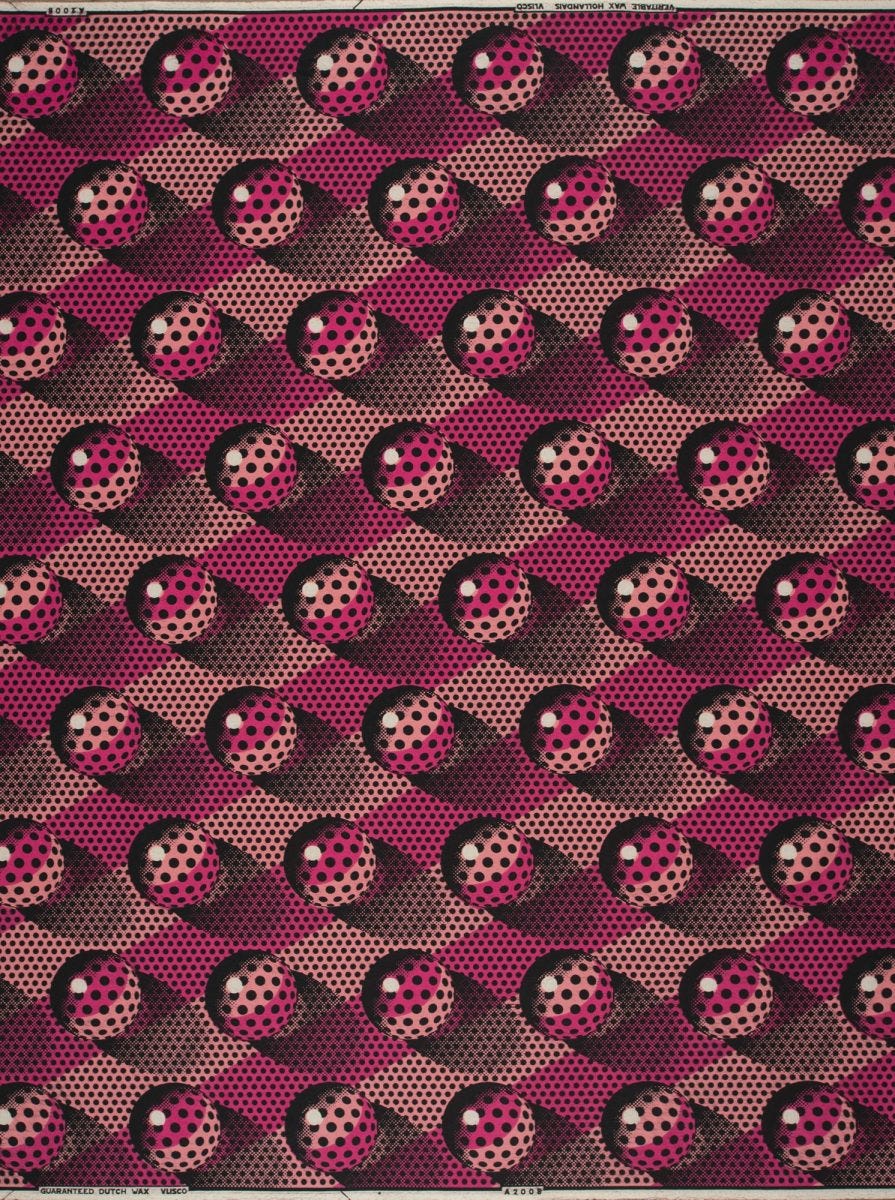
Michiel Schuurman, Billes, 2015.
The Wave That Is Coming
Now let me tell you what I see on the horizon.
As disclosure continues to move forward, you are going to start hearing from a lot of people who were not there. People who mocked this openly and will now go very quiet about that history and pivot smoothly into commentary. People who will say they always suspected there was something to it. People who will do exactly what Tyson did: borrow credibility from an adjacent field and spend it here, positioning themselves as the calm, credentialed voices the public needs in order to make sense of all this, as though their credentials were what was relevant all along, rather than their proximity to the truth.
The same mainstream science media that amplified the ridicule for decades will platform them without irony. Watch for that too.
Watch for it. It is already starting.
People can change. I want to be clear about that, because I think it matters and because I have seen it happen. But there is a template for what that change actually looks like when it is real, and his name was John Mack.
Mack was a Harvard psychiatrist and a Pulitzer Prize winner. He had the kind of institutional credibility that could silence a room, the kind that gets borrowed and spent the way Tyson spent his. In 1990, Mack encountered experiencers for the first time and was skeptical, as he said himself: he thought it must be some kind of mental illness. But he kept listening. He followed the data. And when his thinking changed, he did not quietly pivot. He did not write a fun book. He used every bit of the credibility he had spent a career building and he pointed it at the people who had been carrying this without any protection at all. He sat with them. He documented their accounts. He founded a research program. He told the world they were not mentally ill. They were witnesses.
Harvard investigated him for it. It was the first time in the university’s history that a tenured professor had been subjected to such a review. The investigation lasted fourteen months. His reputation among colleagues was significantly damaged. He kept going anyway, because he understood that using your power to open doors for others is not the same thing as walking through a door yourself.
That is what changing your mind looks like when it is real. You put your credibility in service of the people who never had any. You accept the professional cost. You do not wait until the culture shifts to make it safe, and then publish a book.
Watch for the ones who do not do that. The ones who simply reposition. Who quietly let the public forget what they said before and start collecting an authority that belongs to someone else. The difference between a genuine evolution and a strategic rebrand is not complicated: is the person willing to stand in the damage they did? And are they using whatever platform they have to lift the people who were right all along? Or are they centering themselves in a story that was never theirs to tell?
If not, they have not earned the seat.

Michiel Schuurman, Wax Hollandais, 2014.
Who Has Earned the Mic
The people who deserve to be heard as this unfolds are not the ones who waited until it was safe.
They are the researchers who kept working after the funding disappeared and the colleagues stopped returning calls. The whistleblowers who gave up security clearances and careers and stood in front of Congress anyway. The experiencers who attached their names to their accounts in professional environments where that was still career-ending, who watched the culture call them unstable while they were simply telling the truth, who carried this through decades of isolation and recurring nightmares and the specific loneliness of knowing something that the world around you insists is not real.
And the philosophers and clinicians and researchers who built the intellectual infrastructure for a population that had none. Who argued, in academic journals and university classrooms and congressional testimony, that experiencers are not a fringe curiosity. They are epistemic agents. Credible knowers. Primary sources for a phenomenon that our existing tools are not yet equipped to fully measure.
As the noise gets louder, direct your attention and your trust toward people with proximity. Toward the ones who came to this with awe and genuine curiosity and paid something for it. Toward the experiencers who have been speaking all along, even when speaking cost them. They have been living this. They are the ones who can tell you what it means.
The coming period is a test. We are going to find out very quickly who was actually following the truth and who was following the consensus. The record exists. The timestamps are there. The things people said, publicly, about witnesses and researchers and experiencers are still on the internet.
Experiencers have been living disclosure for a very long time.
They should be the ones to explain what it means.
A Note to Neil
You had everything John Mack had. The institution. The platform. The kind of name that makes people lean in before you have said a word. The borrowed credibility that, pointed in a different direction, could have opened doors instead of closing them.
You also had Sagan’s example, and Sagan’s specific inheritance. The man who imagined Ellie Arroway understood something you apparently do not: that “because I can’t” is not weakness. It is the only honest thing left to say when the experience changes you and the room is offering you the exit. You inherited that vision. You could have extended it. You could have sat with experiencers the way Mack sat with them, listened the way he listened, and used the weight of your name to tell the world that these people deserved to be taken seriously.
You chose the audience instead.
Let that sit for a moment. Because there were real people on the other side of that choice. People who calculated the professional risk of speaking and spoke anyway. People who lost jobs and relationships and their own sense of what was real, and kept carrying it, because the truth of what happened to them would not stop being true just because no one was ready to hear it. They were doing, in their lives, exactly what Ellie does in that committee room. Staying in the room with an impossible thing. Refusing the exit. And you, with every platform and credential they did not have, were part of the culture that made that choice cost them so much.
John Mack is not a household name. His legacy faded, his colleagues distanced themselves, and Harvard investigated him for the crime of believing the people he sat with. He died without seeing the congressional hearings, without seeing the cultural shift that made this subject safe enough to be entertaining.
You are here because of people like him. And because of the experiencers he fought for, the ones whose era of testimony you declared expired, the ones who kept speaking anyway.
The least you could do is say so.
Thank you so much Meredith. I am not a writer, I think and feel about these things, to myself and to those I trust, and honestly sometimes perfect strangers ha ha.
When you publish these essays, I really see how important this kind of writing is. It helps clarify the point. It helps connect the many dots. It helps point us in new directions, or ones we forgot.
Thank you for putting yourself out there and sharing it with us.
One other thing - I am an artist and your use of real art makes my heart sing. I see your respect for what many artists try to do when we create. We try to listen, to that unknowable, and get it down so we can see it in front of us, to try to explain or understand. I really appreciate that you see us. Not that I get it right ever - but seeing the art you include here, makes me want to paint. XO
I’m thinking they should take a lesson from linguistics, where native informants are the gold standard. If a Midwesterner says that merry, marry, and Mary all sound the same, the interviewer doesn’t call them sub-literate but takes it as useful evidence of vowel shifts in a particular dialect. Or if an informant says two words are different, the interviewer accepts that even if they themself can’t hear the subtle distinction. In the same way, experiencers should always be the bottom line on their experiences.